

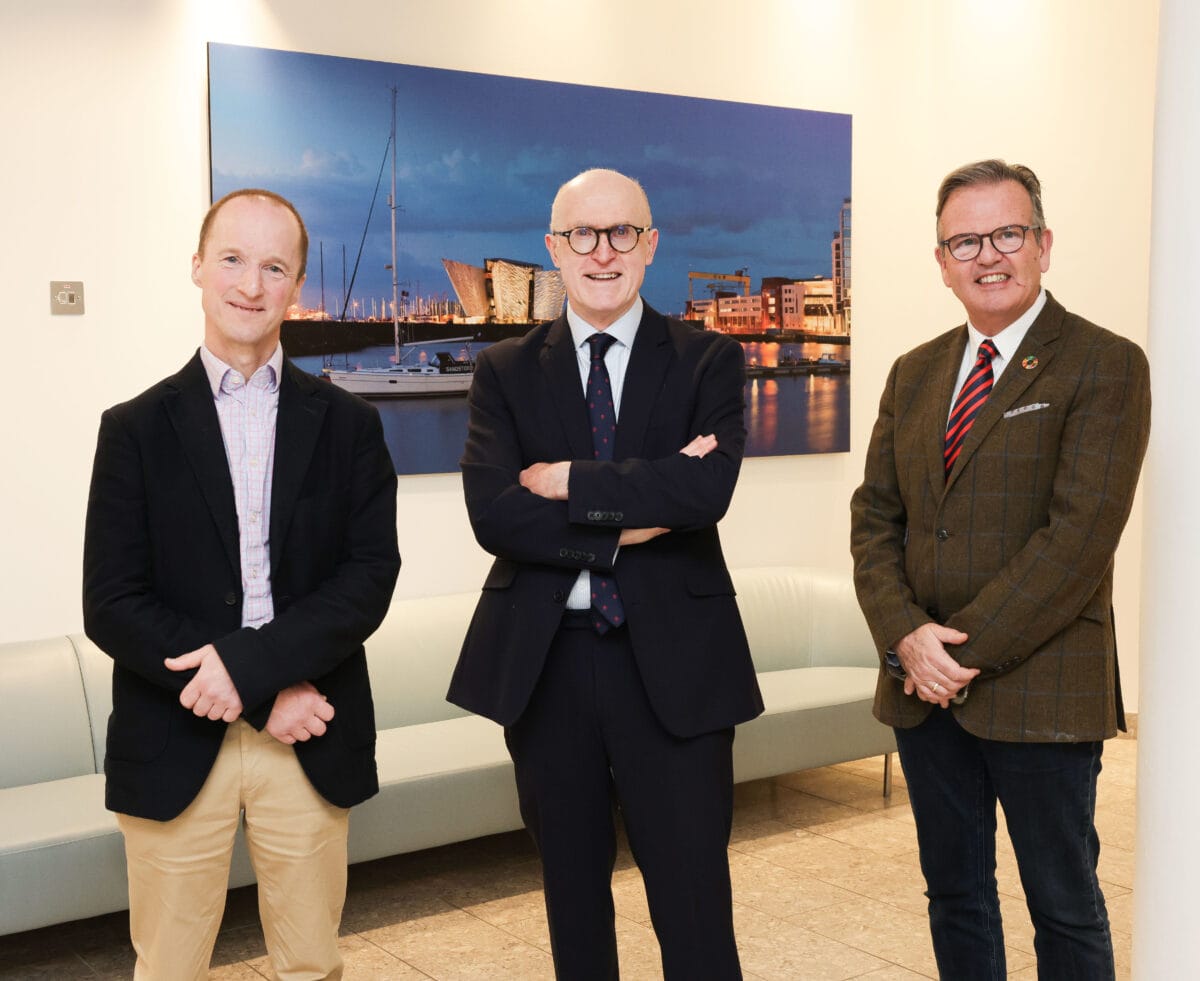
Energy leaders from across government, regulation, system operation and industry, came together for a high-level ‘Policy Eye’ roundtable, examining the critical electricity grid challenges and opportunities linked to Northern Ireland’s Energy Strategy. The event was hosted by Cleaver Fulton Rankin and organised in partnership with the Electricity Association of Ireland. It was supported by public affairs firm Chambré, and brought key stakeholders together to explore the concrete steps required to ensure the grid is prepared, to support the Executive’s target of sourcing 80% of electricity from renewables by 2030.
Stephen Cross, Head of Energy & Renewables and Director at Cleaver Fulton Rankin, said: “We brought together the leading individuals, representing key stakeholders, responsible for delivering on an Electricity grid and system capable of meeting NI’s climate targets. The discussion provided a unique insight into the challenges of course, but also pointed to the solutions. We are delighted to have facilitated this event, and to provide a forum for the exchange of ideas between government policy makers, and the organisations tasked with delivering the infrastructure.”
Dara Lynott, Chief Executive Officer of Electricity Association of Ireland, added: “Reflecting on the roundtable discussion, I was struck by the need to integrate Northern Ireland’s industrial policy with energy policy, in order to drive increased electricity demand for the next data-driven, decarbonised industrial revolution.”
The roundtable was chaired by energy commentator and journalist, Jamie Delargy, and featured a distinguished panel of participants. The roundtable focused on the electricity-grid-related actions set out in the 2025 Energy Strategy Action Plan — one of the key mechanisms for delivering the wider Energy Strategy, The Path to Net Zero Energy. Published in December 2021, the Strategy commits Northern Ireland to a 56% reduction in energy-related emissions by 2030 and net zero carbon emissions by 2050. The roundtable examined the immediate and medium-term interventions required to keep progress on track.
Jamie Delargy stated: “What I’ve taken from our discussions is that NI is poised to make substantial progress towards net zero through, among other things, major investment in the grid, a new renewable electricity support scheme and action to reduce the waste arising from dispatch down. To sustain the advance however, it’s clear what’s needed is a new drive towards further electrification of the economy and, in my view, a cut in the cost of power at the wholesale and retail level.”
Discussion centred on the Department for the Economy’s priority actions for the year, including plans to reduce the connection cost barrier to low-carbon technologies by increasing the socialisation of network reinforcement costs on the electricity distribution grid. Participants also explored the establishment of a Grid Development Monitoring Group, which will oversee progress on essential upgrades required between now and 2030, as well as the development of a smart meter design plan and oversight group, due in Q2 2025. The introduction of smart meters in Northern Ireland is expected to help the system operator run the power system more efficiently, while lowering costs for consumers.
A major theme of the conversation was the need to address renewable dispatch-down levels, which remain a significant source of lost clean-energy potential. Participants discussed technical, regulatory, and planning measures to mitigate curtailment and ensure that renewable generation can be maximised. The roundtable also considered how policymakers could support the development of a more flexible, resilient and sustainable power system capable of meeting the 2030 renewables target, and the overarching emissions-reduction obligations under the Climate Change Act (Northern Ireland) 2022.
Cross-border and external interconnection was another key area of focus. Attendees examined the role of increased interconnection between the Northern Ireland grid, the wider island of Ireland system, Great Britain, and France. as a means of enhancing security of supply and enabling greater integration of renewable electricity. Participants also reflected on the potential for a fast-track grid connections system for innovative clean-power projects, similar to proposals currently under consideration by Ofgem in Great Britain.
Government has signalled its commitment to continued collaboration across departments, industry and consumers in the delivery of the Energy Strategy. This roundtable contributed to that ongoing engagement, helping to facilitate informed, constructive dialogue on the future of Northern Ireland’s electricity grid.
Participants included senior leaders from the Utility Regulator, Department for the Economy, Department for Infrastructure, Mutual Energy, KPMG, SONI, Energia Renewables and NIE Networks. You can listen to the discussion here: https://cleaverfultonrankin.co.uk/legal-update/energy-roundtable-podcast-supporting-ni-electricity-grid-system/