

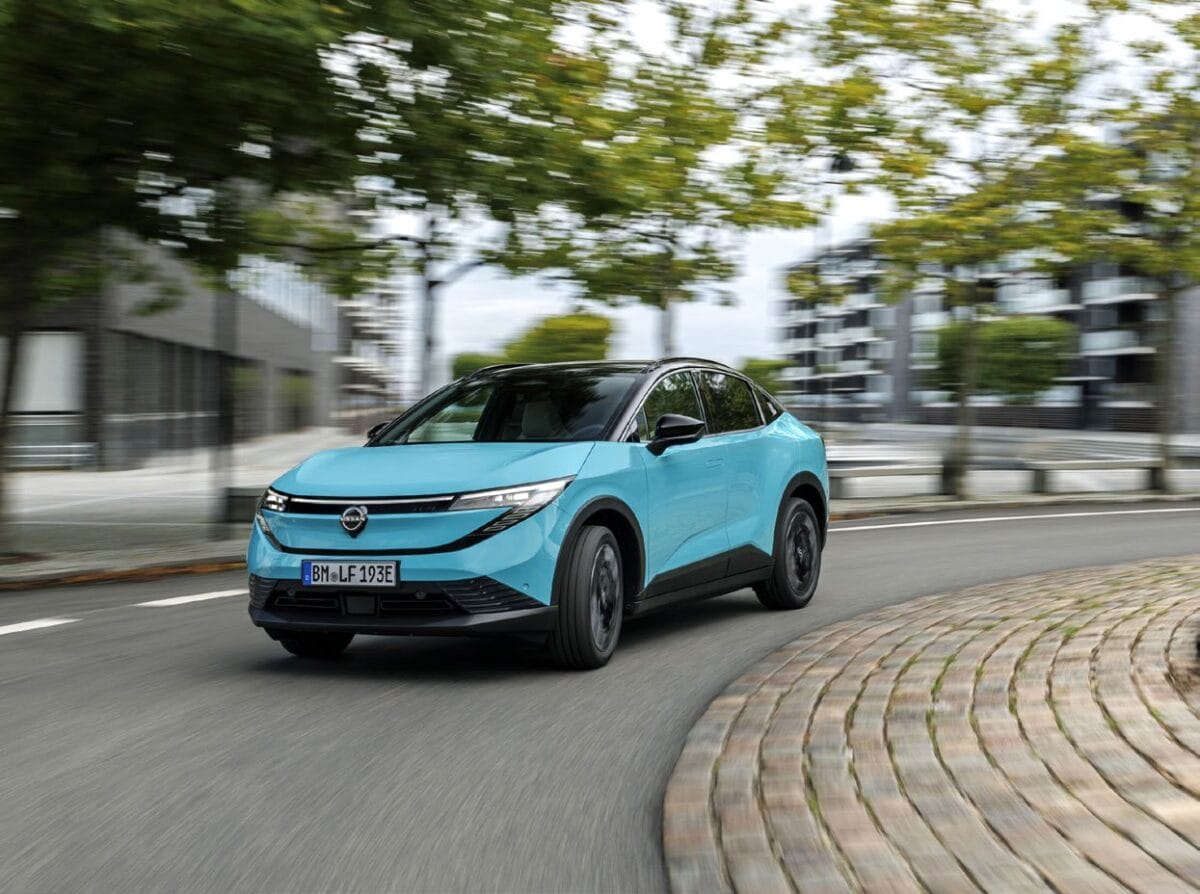
Nissan’s all-new Leaf has the looks, tech, range and likely price to be a real contender, writes Jame Stinson
Nissan should have been in pole position to take advantage of the electric car revolution. It was ahead of the game by a mile when it launched the Nissan Leaf, the first mainstream electric car back in 2010. But Nissan lost its way and failed to capitalise. The Leaf, while it was a good electric car, never morphed into something truly desirable… in the way a Tesla is, for example. Still, the ship hasn’t yet sailed for new electric models. Sales have only started to take off in the last couple of years and there’s still plenty of time for new brands and models to join the party.
This all-new third-generation Leaf is a massive leap forward from the old car… bringing improved aerodynamics, longer range, new tech and eye-catching looks. Two battery sizes are offered, 52kWh or 75kWh, which Nissan has managed to translate into impressive claimed range of 271 and 386 miles respectively. North of 300 miles should be achievable in real-world driving conditions.
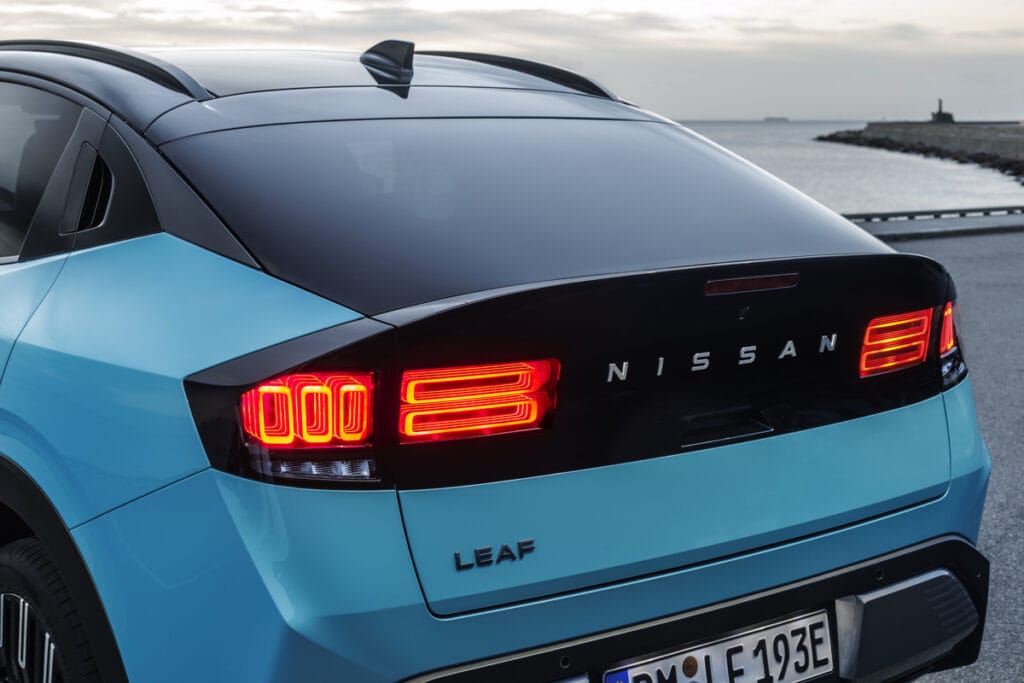
Motorway driving is the bane of all electric cars. Put your foot down and range plummets but Nissan claims the 75kWh version can manage up to 269 miles at 70 mph and an energy consumption as low as 4.5 miles/ kWh, ensuring longer journeys can be accomplished with fewer charging stops. For info, the original Leaf had a claimed range of just 124 miles. When you do need to plug in, the Leaf supports either 105kW or 150kW DC fast charging depending on battery size. Both batteries should do a 20-80% charge in around half an hour using a fast charger. Overnight charging from a home wallbox will take 8.5 hours or 11.5 hours.
Where the old Leaf hatchback was a bit frumpy, the new car, which has morphed into an SUV is pert, with distinctive lines and a futuristic look. It’s very pretty with a swooping silhouette that delivers a super-low 0.25 drag coefficient, boosting range. Drive is through the front wheels with either 174bhp or 215bhp on tap, depending on which battery size you choose. Performance is spritely with 0-62mph doable in 8.3 or 7.6 seconds respectively in Sport mode. Top speed is capped at 99mph.
There’s lots of ways to extend range in an electric car… the most obvious being easy on the accelerator. Regenerative braking, if done right, also makes a big difference. Instead of using the brakes to slow down, you let the car slow down itself and in the process of doing so, the car harvests energy and uses it to recharge the battery. It’s not something that comes naturally to drivers migrating over from petrol cars but you soon get the hang of it… and most models allow you to alter the degree at which the car brakes when you take your foot off the accelerator.
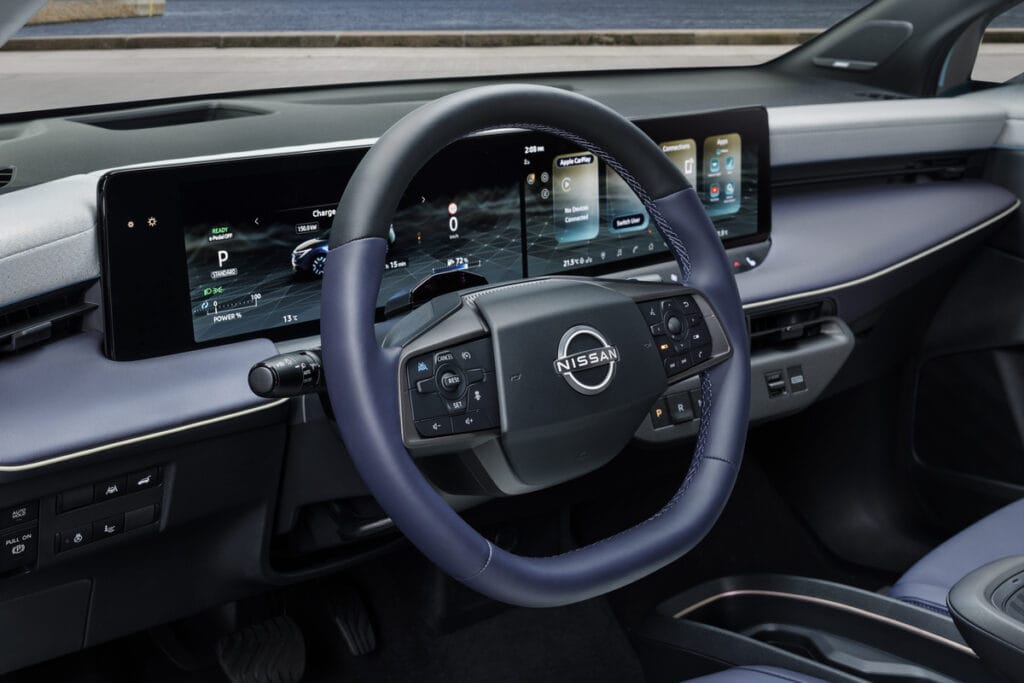
Helpfully, in Nissan’s case this is via paddles on the steering wheel. The Leaf also has adaptive ‘e-Pedal’ mode which allows for one-pedal driving around town. Inside, two large twin 14.3-inch touchscreens sit side-by-side on the dashboard – 12.3 inch on the entry-level trim – giving a panoramic display with a wealth of information nicely presented and easily visible. Thankfully, Nissan has kept the Aircon/heating controls separate, which will make them easier to use when driving. It’s got all the latest tech including Apple CarPlay, Android Auto, built-in Google maps and voice recognition.
Production at Nissan’s Sunderland factory starts later this year with sales starting early 2026. Prices haven’t been firmed up yet, but the smaller battery version will probably cost from around £33,000 with the longer range version starting close to £36,000. The Leaf will likely be eligible for the UK government’s electric car grant scheme which could knock another £3,750 off those prices, which would make it look very competitive against rivals.