

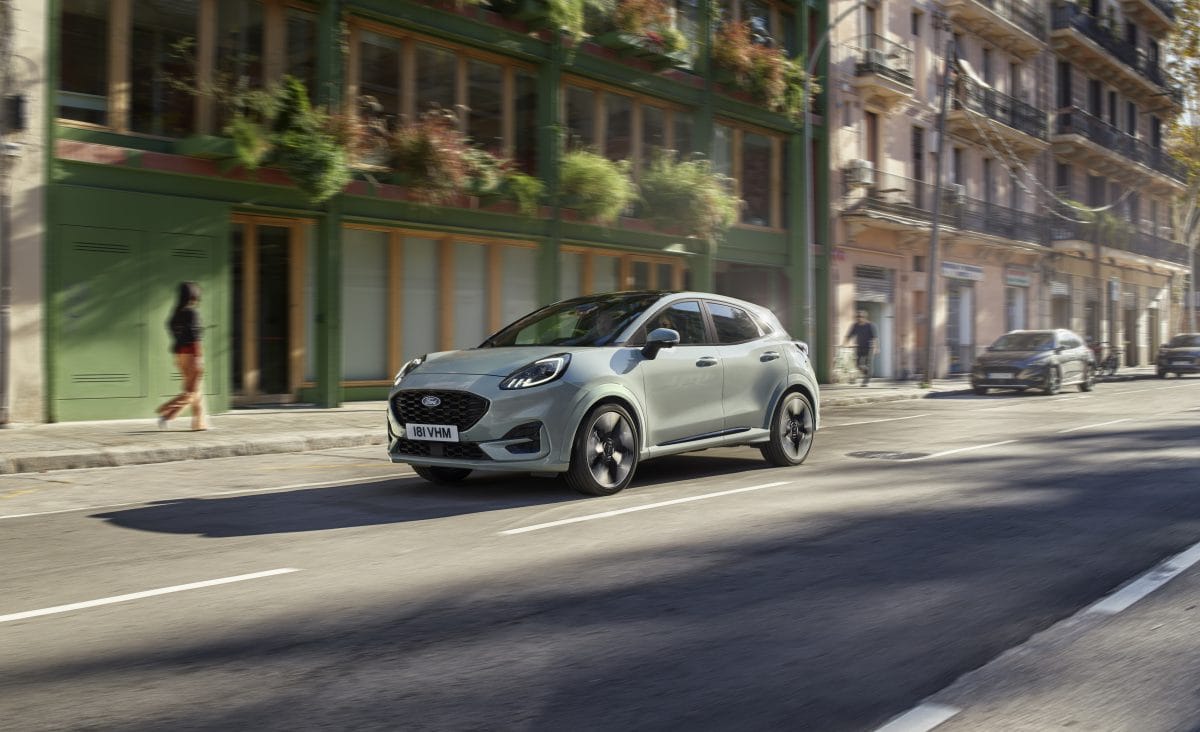
The Ford Puma remains one of the UK’s best-selling compact crossovers in 2025, thanks to its sharp handling, big boot and updated technology. With new infotainment, mild-hybrid petrol engines and the arrival of the all-electric Puma Gen-E, it appeals to both private buyers and company-car drivers. Here’s how it compares with rivals like the Nissan Juke, Toyota Yaris Cross and Peugeot 2008 — plus what you need to know about Benefit-in-Kind (BiK) tax.
The Ford Puma remains one of the UK’s most popular compact crossovers. A refresh for 2025 brought a sleeker interior layout, upgraded digital displays, and Ford’s latest SYNC 4 infotainment. The Puma continues to major on sharp handling and clever practicality, while company-car drivers now have both petrol-hybrid and full-electric options to consider.
Driving & Engines
Ford still tunes the Puma to feel more agile than most rivals. Light steering and good body control make it engaging in town and composed on country roads. The 1.0-litre EcoBoost mild-hybrid petrol is available in 125 PS and 155 PS versions, with either a manual or dual-clutch automatic gearbox. There’s also the ST model with 170 PS for drivers who want hot-hatch levels of punch.
The Puma Gen-E, Ford’s new electric version, joins the line-up in 2025 with an expected range of around 230 miles on the WLTP test cycle.
Cabin & Technology
Inside, the Puma has gained a larger digital instrument panel and a central 12-inch touchscreen. Wireless Apple CarPlay and Android Auto come as standard, while connected navigation and over-the-air updates are now offered. Overall quality has improved, with simpler switchgear and a more modern design compared to the outgoing car.

Practicality
Boot capacity is a standout strength. At 456 litres, the Puma comfortably beats most competitors in this class. The useful “MegaBox” under-floor compartment adds another 80 litres of washable storage — ideal for muddy sports gear or work kit. Rear passenger space is acceptable, though rivals such as the Peugeot 2008 feel a little more generous in the back.
Rivals
- Nissan Juke – sharp styling and the option of a hybrid, but smaller boot and less fun to drive.
- Toyota Yaris Cross – petrol-electric hybrid only, which makes it attractive for fuel economy and company-car tax, though it lacks the Puma’s handling sparkle.
- Peugeot 2008 – stylish cabin and softer ride; available as both petrol and the e-2008 EV, which can deliver very low Benefit-in-Kind (BiK) rates.
Business Use & Benefit-in-Kind
For company-car drivers, BiK is where the story gets interesting.
- The mild-hybrid petrol Puma typically emits 121–135 g/km of CO₂, putting it in the 30–33% BiK bands for the 2025/26 tax year. That means monthly costs in line with other petrol crossovers, but higher than most hybrids.
- The Toyota Yaris Cross hybrid sits closer to 101–109 g/km, dropping it into lower BiK bands (around 26–28%), making it cheaper to run as a company car.
- The Puma Gen-E (EV) qualifies for just 3% BiK in 2025/26, rising slowly in future years. For higher-rate taxpayers, this makes the electric Puma — or rivals like the Peugeot e-2008 — far more tax-efficient than petrol models.
Verdict
For private buyers, the Puma is one of the most enjoyable compact crossovers to drive and among the most practical thanks to its generous boot. For fleets and company-car drivers, the petrol models are competitive but not tax-leaders; the new Puma Gen-E EV will be the smarter choice if BiK efficiency is the top priority.