

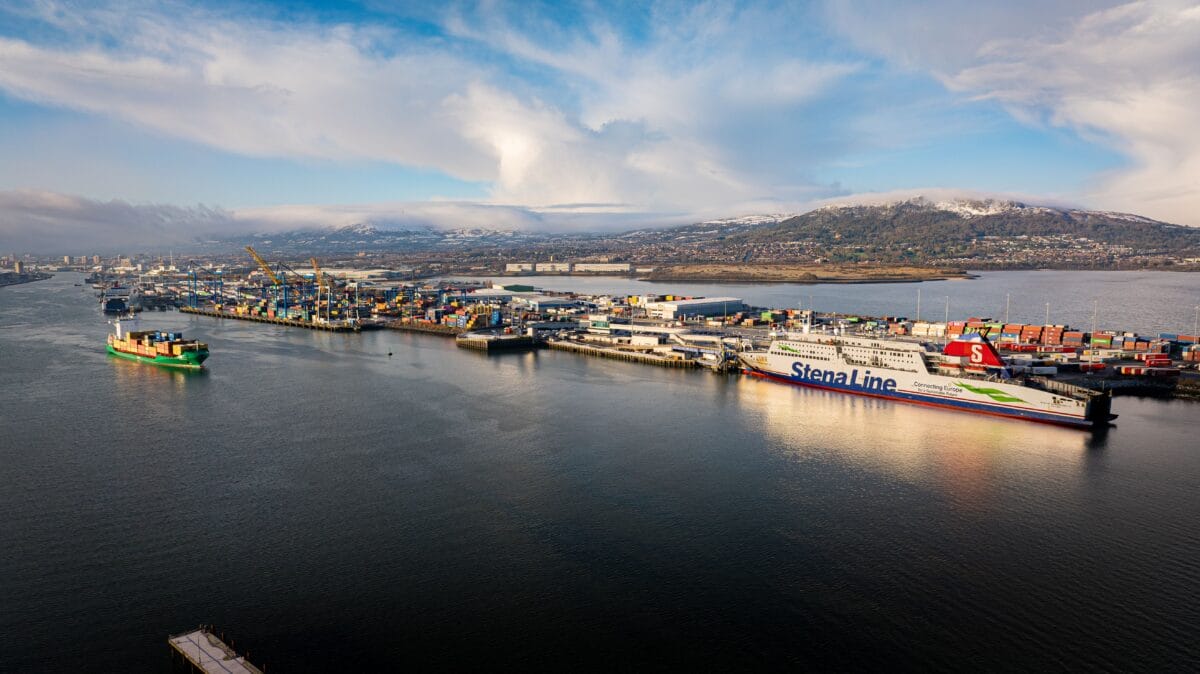
Trade through Belfast Harbour pushed up towards record levels in 2025, driven by across the board increases in goods transported by all shipping modes.
Releasing its annual trade figures, Belfast Harbour today reported that 24.3 million tonnes of goods passed through the Trust Port in 2025, up from 24.1 million tonnes the year before.
Belfast Harbour is the leading regional gateway for trade, handling more than 70% of the Northern Ireland’s seaborne imports and exports and 25% of sea trade for the island of Ireland. Each year, the port handles goods and freight valued at £26.7bn, enabling more than 15% of Northern Ireland’s economic output.
2025 was a strong year for the shipping of commodities in and out of Belfast, with grain and animal feeds reaching record levels of 2.76 million tonnes, surpassing last year’s previous record figure of 2.46 million tonnes and indicating the continued strength of the region’s farming and agrifood sector.
It was also a strong year for liquid bulk commodities, with volumes of refined oils including petrol and diesel up 6% on the year before, while break bulk volumes were also robust, with steel up 11% to 200,000 tonnes.
2025 was also a record year for Roll-On Roll-Off (RoRo) freight traffic delivered by Belfast Harbour’s partner, ferry operator Stena Line, with 625,000 freight equivalent units comprising of HGVs, smaller commercial vehicles and cars for the motor trade, passing through the port. This surpassed the previous record performance of 618,000 delivered in 2024.
The figures demonstrate the importance of Stena Line’s freight traffic routes to Scotland and England to the local economy, with numbers expected to increase as the operator introduces its new larger vessels on Belfast routes.
The number of tourist coaches increased by 6% to 13,500 and ferry passengers travelling through the Port also grew by 2% to 1.73 million during the year.
Container traffic saw a positive performance, ending the year up 1% on the previous year with 124,118 units handled – a second consecutive year-on-year increase.
Meanwhile, agri‑food exports remain a vital part of Northern Ireland’s trading strength, relying on fast, reliable connections to key GB markets to maintain supply chains and support continued growth across the sector.
Michael Robinson, Belfast Harbour’s Port Director, said: “The results for 2025 show that the Port community is continuing to do a great job transporting people and delivering the goods and services that we all rely on, not only in business and industry, but in all aspects of our daily lives.
“Trade through Belfast Harbour has once again been resilient in the face of local and global headwinds and we were proud to keep supporting essential industries such as agrifood throughout the year. We continue to invest in our Port facilities and will this year unveil our 2025-2050 Masterplan, which contains plans for major port expansion and upgrades that will further increase our port trade capacity.
“While we remain vigilant to the challenges facing the economy, we are encouraged by this strong performance across all categories, which once again demonstrates the important role Belfast Harbour plays in keeping the local economy moving.”
Paul Grant, Trade Director Irish Sea North, Stena Line said:
“Stena Line’s routes from Belfast Harbour continue to be some of the most successful across our network, and we’re delighted to have once again hit a record number of freight units passing through the city. With the recent arrival of our two new freight vessels for our Belfast – Heysham service, Stena Futura and Stena Connecta, we expect that this growth will continue with increased capacity to meet continued high demand.”
Claudine Heron, Agri Division CEO, W&R Barnett, said:
“The Agri‑feed market continued to show strong demand throughout 2025, and the reliability and efficiency of operations at Belfast Harbour have been central to supporting that growth. The long‑term commitments set out in the Belfast Harbour 2050 Masterplan provide confidence that the port will continue to invest in the modern, sustainable infrastructure needed to keep supply chains resilient and competitive, particularly for our Agri customer base. For businesses like ours, this forward‑looking approach is essential to enabling productivity, supporting future expansion and contributing to wider economic prosperity across Northern Ireland.”
Michael Bell OBE, Executive Director, Northern Ireland Food and Drink Association said:
“Increased trade across the Irish Sea demonstrates both the strength of the Northern Ireland food and drink industry, and the importance of our region to UK food security. Locally our industry supports some 113,000 jobs across the supply chain and feeds 10 million people across the UK. With a growing world population and heightened geopolitical uncertainty, our strategic role in feeding the nation has never been more important, and the seamless movement of goods between Great Britain and Northern Ireland is key to fulfilling that mission.”